
Executive Summary
International students in London typically spend £1,300–£2,750/month on living costs (excluding tuition) — 40–60% more than in Manchester, Birmingham, Glasgow, or Leeds. Rent (£280–£700+/week) drives most of that gap.
On top of living costs, every Student visa applicant must budget a £558 application fee, an Immigration Health Surcharge (IHS) of £776/year, and proof of maintenance funds of £1,529/month in London (capped at £13,761 for nine months). Students can work up to 20 hours/week in term time at the National Living Wage of £12.71/hour (from April 2026), offsetting £800–£1,000+ of monthly costs.
Quick Facts (2026)
Monthly living costs: £1,300–£2,750
Accommodation: £280–£700+/week
Food & groceries: £150–£400/month
Transport: £60–£150/month
Student visa fee: £558
Immigration Health Surcharge (IHS): £776/year
Maintenance funds (London): £1,529/month
Part-time work: Up to 20 hours/week
International tuition fees: £11,400–£38,000/year
Council tax: Exempt for full-time students
Cost of living = recurring monthly expenses (accommodation, food, transport, utilities, healthcare-related charges, course materials, leisure), excluding tuition.
Visa Costs Before You Arrive

Application fee: £558 (since 8 April 2026), non-refundable, paid regardless of outcome.
IHS: £776/year at the student rate (vs. £1,035/year standard), charged in 6-month blocks upfront — typically £2,700–£3,100 across a 3-year course with visa buffer.
Maintenance funds: £1,529/month in London (£13,761 cap for 9 months), or £1,171/month outside London (£10,539 cap), plus unpaid tuition shown on your CAS. Funds must sit in an eligible account for 28 consecutive days, with the closing balance dated within 31 days of applying — the most common cause of refusals is getting this timing wrong.
Worked example: A 3-year undergraduate in London with £17,600 first-year tuition (£5,500 already paid as deposit) needs to show £13,761 + £12,100 = £25,861, held for 28 days.
Key takeaway: Budget £558 + £776/year + £13,761 before spending anything on actual rent or food.
Accommodation: £280–£700+/Week

Accommodation Costs (2026)
University halls (shared bathroom): £180–£300/week (£780–£1,300/month) – Bills usually included.
En-suite halls/PBSA: £270–£450/week (£1,170–£1,950/month) – Bills usually included.
PBSA studio: £400–£700+/week (£1,730–£3,030+/month) – Bills almost always included.
Shared private house: £150–£300/week (£650–£1,300/month) – Bills often not included.
Private studio/1-bedroom: £250–£500+/week (£1,080–£2,165+/month) – Bills usually not included.
PBSA rents in London rose roughly 18% between 2022/23 and 2024/25 (HEPI), now averaging around £295/week. Price depends mainly on zone, contract length, whether bills are bundled, and catered vs. self-catered.
Key takeaway: Shared private housing is cheapest after first year but excludes bills (~£100–£150/month extra). PBSA costs more but bundles everything.
Food, Transport & Healthcare

Food: £150–£220/month for budget self-catering (Aldi, Lidl, Tesco); £250–£350 mixed; £400–£500+ for frequent takeaway/eating out.
Transport: £60–£150/month with an 18+ Student Oyster photocard (30% off Travelcards/Bus & Tram passes; ~£20–£21 one-off admin fee; doesn't discount PAYG fares).
Monthly Transport Costs (Student Oyster)
Zones 1–2: ~£84/month
Zones 1–3: ~£99/month
Zones 1–4: ~£121/month
Healthcare: The IHS (£776/year, paid with your visa) covers GP visits, NHS hospital and A&E care, mental health, maternity, and sexual health services — but not routine dental, optical, or English prescriptions (small per-item charge). Register with a GP within your first week (free, 3–5 working days, needs passport + enrolment letter + proof of address); paying the IHS doesn't register you automatically.
Total Monthly Budget by Tier
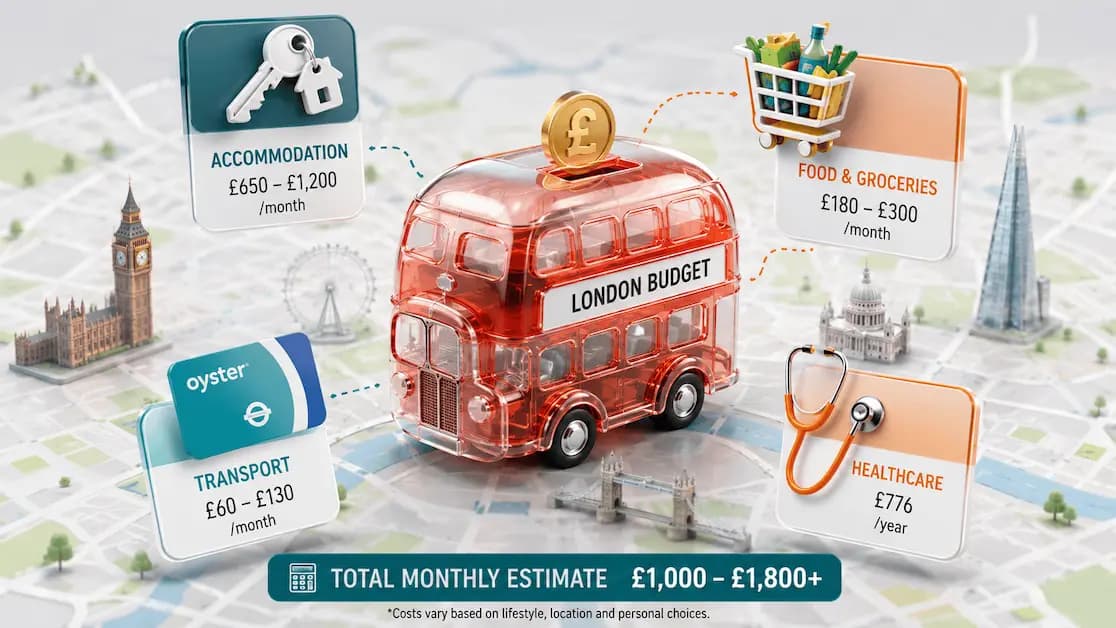
Estimated Monthly Budget (2026)
Budget Student: ~£980–£1,380/month
Accommodation: £650–£900
Food: £150–£220
Transport: £60–£85
Other expenses: £120–£175
Mid-Range Student: ~£1,770–£2,410/month
Accommodation: £1,200–£1,600
Food: £250–£350
Transport: £85–£110
Other expenses: £235–£350
Comfortable Lifestyle: ~£2,640–£3,745/month
Accommodation: £1,800–£2,500
Food: £350–£500
Transport: £110–£150
Other expenses: £380–£595
Annualised, a mid-range budget is roughly £21,000–£29,000/year in living costs alone, separate from tuition.
London vs. Other UK Cities
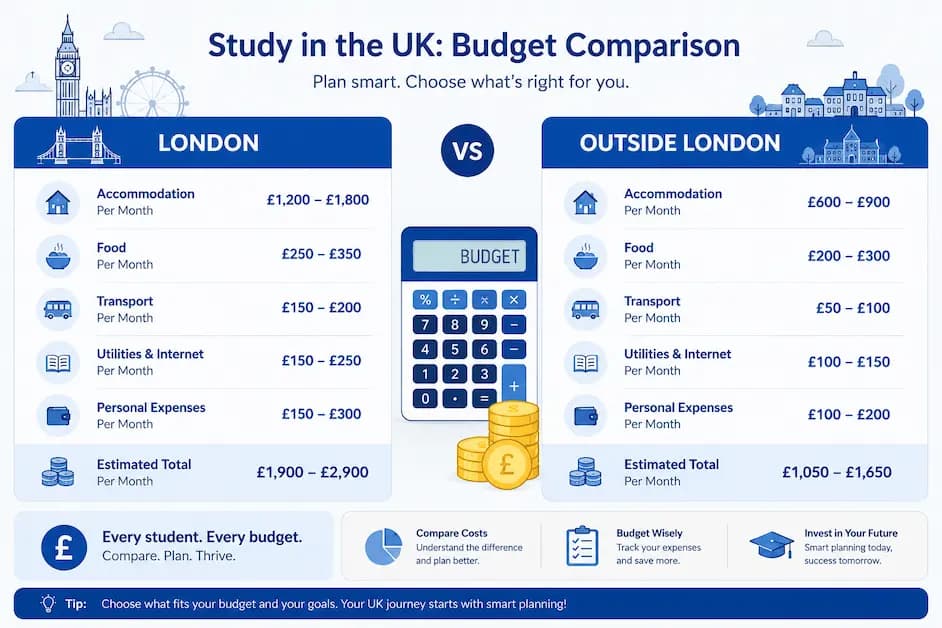
Living Cost Comparison (2026)
London: £1,300–£2,750/month
Manchester, Birmingham, Glasgow & Leeds: £900–£1,100/month
London costs 40–60% more, almost entirely due to rent — a genuine factor against London's career and networking edge
Working While Studying

Degree-level students can work up to 20 hours/week in term time (10 hrs/week below degree-level), full-time during official vacations. The cap is assessed Monday-to-Sunday, not averaged.
Minimum Hourly Wage (from April 2026)
Age 21+: £12.71/hour
Age 18–20: £10.85/hour
Under 18: £8.00/hour
20 hours/week at £12.71 = ~£1,100/month before tax — and since the tax-free Personal Allowance is £12,570/year, most part-time student earnings aren't taxed. This can cover 50–80% of a budget-tier student's monthly costs.
Two Real-World Scenarios
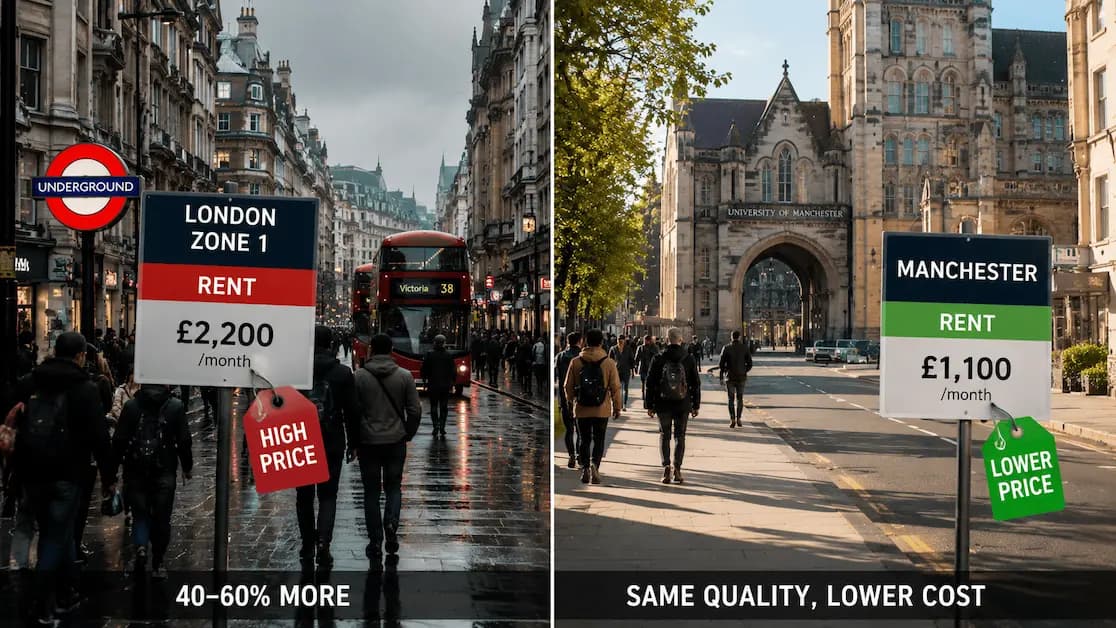
Budget postgraduate (Nigeria): Shared house, Zone 3, £750 rent + £45 utilities + £190 food + £99 transport + £120 phone/leisure = ≈£1,204/month. Covers most of it working 16 hrs/week.
Comfortable lifestyle (US): Zone 2 private studio £2,100 + £420 food + £130 transport + £400 utilities/phone/leisure = ≈£3,050/month. The gap between scenarios is almost entirely accommodation, not food or transport.
conclusion
Quick Tips to Cut Costs
Book accommodation early; get an 18+ Student Oyster photocard if commuting regularly; cook at home and shop budget supermarkets; register with a GP in week one; use a SIM-only plan (giffgaff, Lebara, Voxi); confirm your council tax exemption is applied; track the 20-hour work cap strictly weekly; open a UK bank account early.
Common mistakes: underestimating rent's share of the budget, forgetting bills aren't always included, miscalculating the 28-day fund rule, averaging work hours across weeks instead of weekly, and delaying GP registration until you're already sick.
Studying in London is a rewarding experience, but it requires careful financial planning. By understanding the costs of accommodation, food, transport, and other daily expenses, you can create a realistic budget and make the most of your student life. With smart spending habits, student discounts, and part-time work opportunities, living in London can be both manageable and enjoyable. Plan ahead, budget wisely, and you'll be well prepared for a successful academic journey in 2026.
Related SettledHub Guides
UK Student Life · Student Accommodation · Part-Time Jobs for Students · UK Banking for International Students · Moving to the UK · London Student Guide