
Introduction
Starting university in the UK is exciting, but understanding taxes can be confusing for international students. This guide explains Income Tax, National Insurance, Student Visa work limits, and how to claim a tax refund from HMRC—so you can manage your earnings with confidence.
Do International Students Pay Tax in the UK?
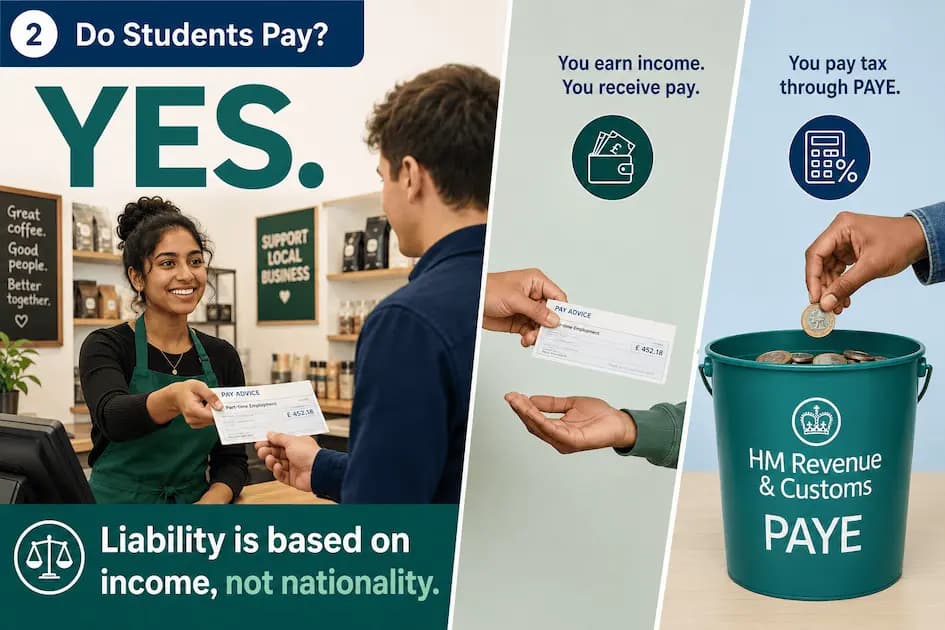
Yes, international students follow the same UK tax rules as UK nationals.
Tax depends on your income, not your nationality or visa type.
The UK tax year runs from 6 April to 5 April.
You usually pay Income Tax when your earnings are above the £12,570 Personal Allowance.
Most students earn below this amount because of Student Visa work-hour limits.
If Income Tax is deducted but you don't owe it, you may be able to claim a refund.
Your employer automatically deducts Income Tax and National Insurance through PAYE.
These deductions are shown separately on your payslip.
The UK Personal Allowance: How Much Can You Earn Tax-Free?
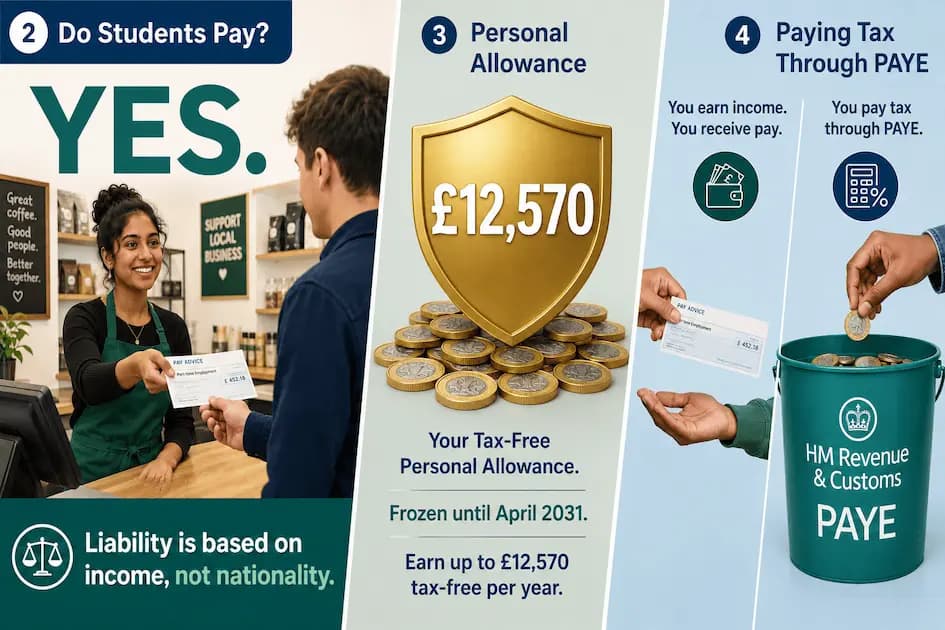
Your tax code
HMRC assigns a tax code that tells your employer how much of your pay to leave untaxed:
1257L is the standard code for one job — it spreads your £12,570 allowance evenly across 12 months.
If you take a second job, that employer may apply a flat-rate code like BR (20% from the first pound) since your Personal Allowance is normally only applied to one job at a time.
If you're placed on an emergency tax code, you may see tax deducted even though your projected annual income is well under £12,570. This is recoverable — it isn't a final bill.
Always fill in your employer's Starter Checklist accurately when you begin a job; it's the main way incorrect tax codes get prevented in the first place.
National Insurance for International Students: Rules and Thresholds (2026/27)
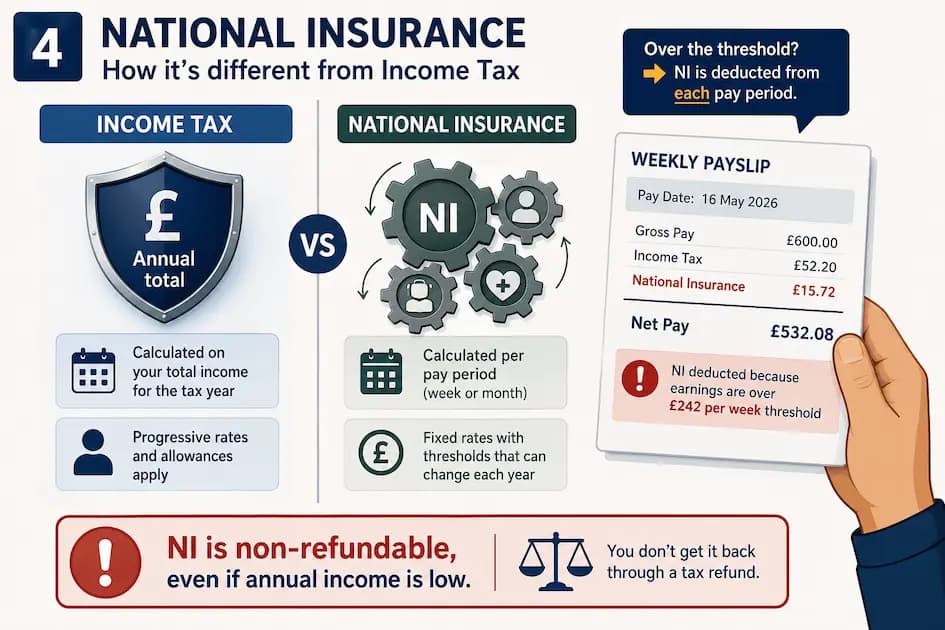
Yes, international students may have to pay National Insurance (NI).
NI is based on how much you earn in each pay period, such as a week or month.
If your earnings are above the NI threshold, NI will be deducted from your pay.
NI is different from Income Tax and is generally not refunded just because your yearly income is below £12,570.
For 2026/27, the Class 1 employee NI thresholds are:
0% on earnings up to £242/week (£1,048/month, £12,570/year)
8% on earnings between £242 and £967 a week
2% on any earnings above £967 a week
This means that if you work extra hours over a university break and earn, say, £400 in one week, NI is deducted on the £158 above the £242 threshold for that specific week — even if you earn nothing the following week and your total yearly income is modest.
Getting a National Insurance Number (NINo)
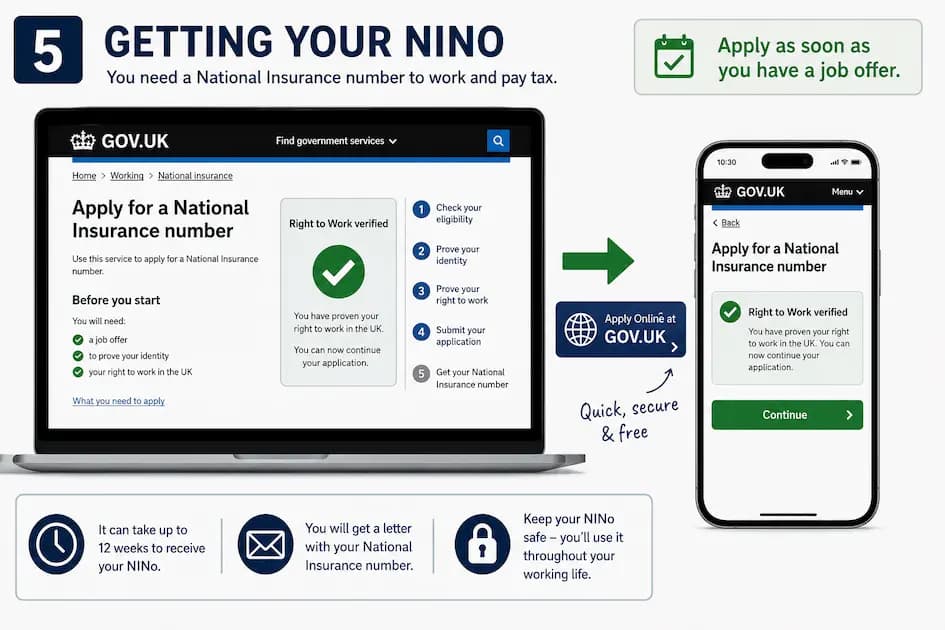
You need a NINo to be correctly recorded in HMRC's system, but you don't need one to start a job — you can begin working as soon as you've proven your right to work in the UK (via your eVisa or BRP). Apply online at GOV.UK as soon as you have a job offer; it typically takes up to 4 weeks to arrive once your identity is verified. Delaying your application is the most common reason students get placed on emergency tax.
Student Visa Work Rules and Income Compliance
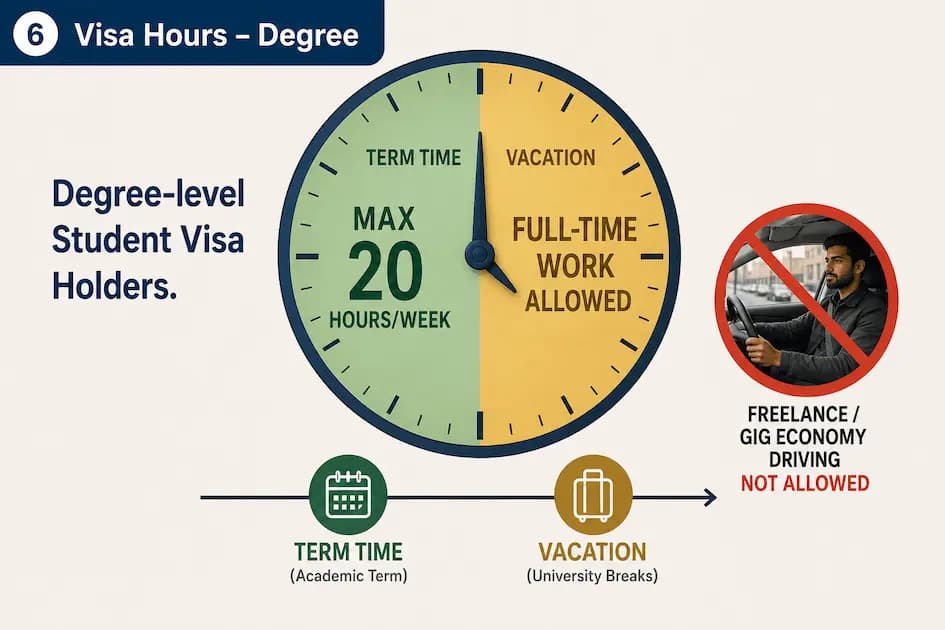
Degree-level students: International students studying at degree level can work up to 20 hours per week during term time.
Below degree-level students: Students on courses below degree level can work up to 10 hours per week during term time.
Multiple jobs: The work-hour limit applies to all jobs combined. Having two part-time jobs does not increase your allowed hours.
Weekly limit: A working week is Monday to Sunday, and extra hours cannot be carried over to another week. For example, working 25 hours one week and 15 hours the next still breaks the limit.
Term time: Your university's official academic calendar decides when you are in term time. Your personal exam or study schedule does not change the limit.
University holidays: During official vacation periods, eligible Student Visa holders can usually work full-time.
Restricted work: Student Visa holders cannot normally do self-employment, freelancing, gig work, professional sports, or entertainment work.
After graduation: The Graduate Route visa generally removes the Student Visa work-hour restrictions, allowing graduates to work more freely.
Example: At £12.71 per hour, working 20 hours a week gives approximately £254 per week before tax and other deductions.
How to Claim a UK Tax Refund as an International Student
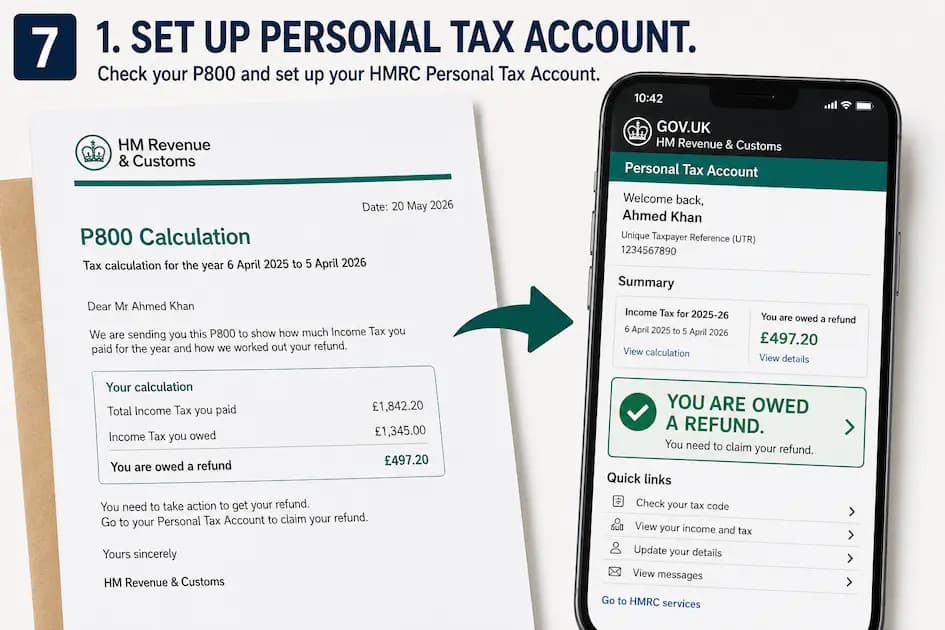
1. Set up a Personal Tax Account
Create an account on GOV.UK to check your tax details and refunds.
2. Check for a P800 letter
After the tax year ends on 5 April, HMRC may send you a P800 if you have paid too much tax. Follow the instructions in the letter to claim your refund.
3. Use P85 if you are leaving the UK
If you leave the UK before the tax year ends, you may need to submit form P85 to claim any tax you have overpaid.
4. Check previous years
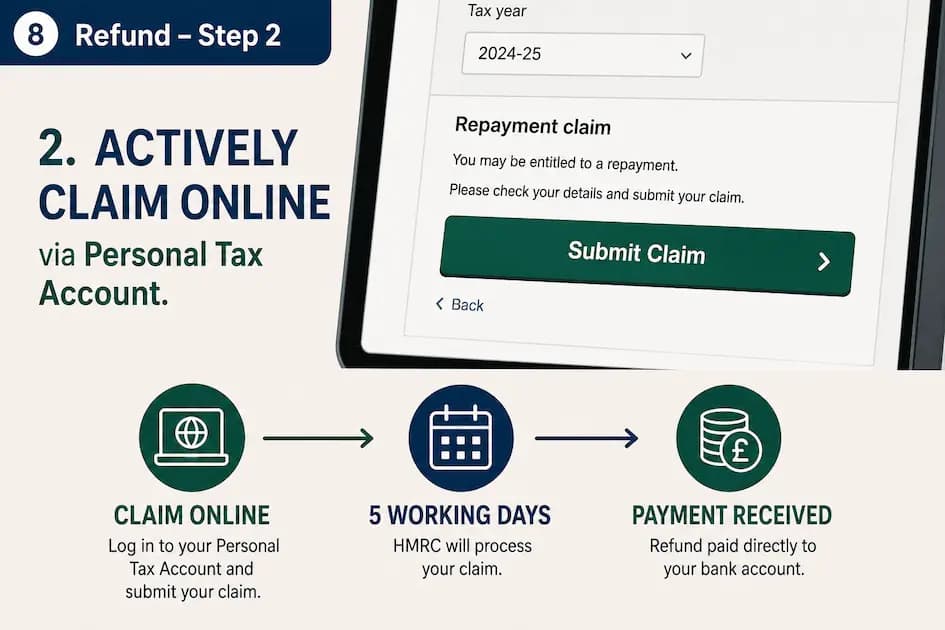
You may be able to claim overpaid tax from the previous 4 tax years, so check your HMRC account even if you did not receive a P800.
Tip: Claim directly through HMRC rather than using third-party tax refund companies that charge a fee.
UK Student Tax
Income Tax: 20% basic rate on income above the Personal Allowance.
Personal Allowance: £12,570 per tax year.
National Insurance: 8% on weekly earnings between £242 and £967; calculated for each pay period.
PAYE: Your employer automatically deducts Income Tax and National Insurance from your salary.
Tax Refund: Overpaid Income Tax may be claimed back if your annual income is below £12,570.
National Insurance Number: Apply after receiving a job offer; it can take up to 4 weeks.
Student Visa Work Limit: Up to 20 hours/week for degree-level students or 10 hours/week for below-degree-level students during term time.
Self Assessment: May be needed if you have more than £1,000 of untaxed income.
Common Mistakes to Avoid
Many students assume being a full-time student exempts them from tax entirely — it doesn't; HMRC applies the same rules to everyone based on income alone. Others ignore their payslips, missing tax code errors or an incorrect National Insurance Number that can delay a refund. Accepting cash-in-hand pay to dodge the visa's hour limit is a serious risk: it breaches both tax law and immigration conditions and can jeopardise a future Graduate Route application. Finally, letting your address or employer details fall out of date with HMRC is a common reason refund letters and payments go missing.
Quick Checklist
Confirm your tax code reads 1257L on your first payslip.
Apply for your National Insurance Number as soon as you accept a job offer.
Keep digital copies of every payslip, P45, and P60.
Track your weekly hours yourself — don't rely solely on your employer's system, especially with two jobs.
Set up a Personal Tax Account early so you can check for refunds without waiting for post.
Confirm official term and vacation dates with your university registrar before working full-time.