
UK Pre-Arrival Checklist for International Students (2026)
Everything you need to prepare before moving to the UK—from your student visa and accommodation to banking, budgeting, travel, NHS registration, and settling into university life.
Over 600,000 international students arrive in the UK each year. The ones who settle in fast all have one thing in common—they prepared before they landed.
Getting your visa dates wrong, arriving without a bank account, or missing a university enrolment deadline can derail your first weeks completely. These aren't worst-case scenarios—they're the most common mistakes new international students make.
This 2026 UK pre-arrival checklist covers every step you need to take before boarding your flight—from visa documents and accommodation to banking, NHS registration, and work rights. It's fully updated, actionable, and built for students heading to any UK city.
Start at least 3–4 months before your course begins. Every week of preparation counts.
📋 Quick Answer — What's on the UK Pre-Arrival Checklist?
Heading to the UK to study in 2026? Between visa documents, accommodation, banking, and NHS registration, there's a lot to organise—and getting it wrong is costly. This checklist covers every key step, updated for 2026, so you arrive confident and prepared.
10 key steps:
Organise documents
Secure accommodation
Meet visa financial requirements
Set up UK banking
Complete university enrolment
Book travel
Register with the NHS
Understand work rights
Learn UK culture basics
Pack smart
Organise Your Essential Documents 📂
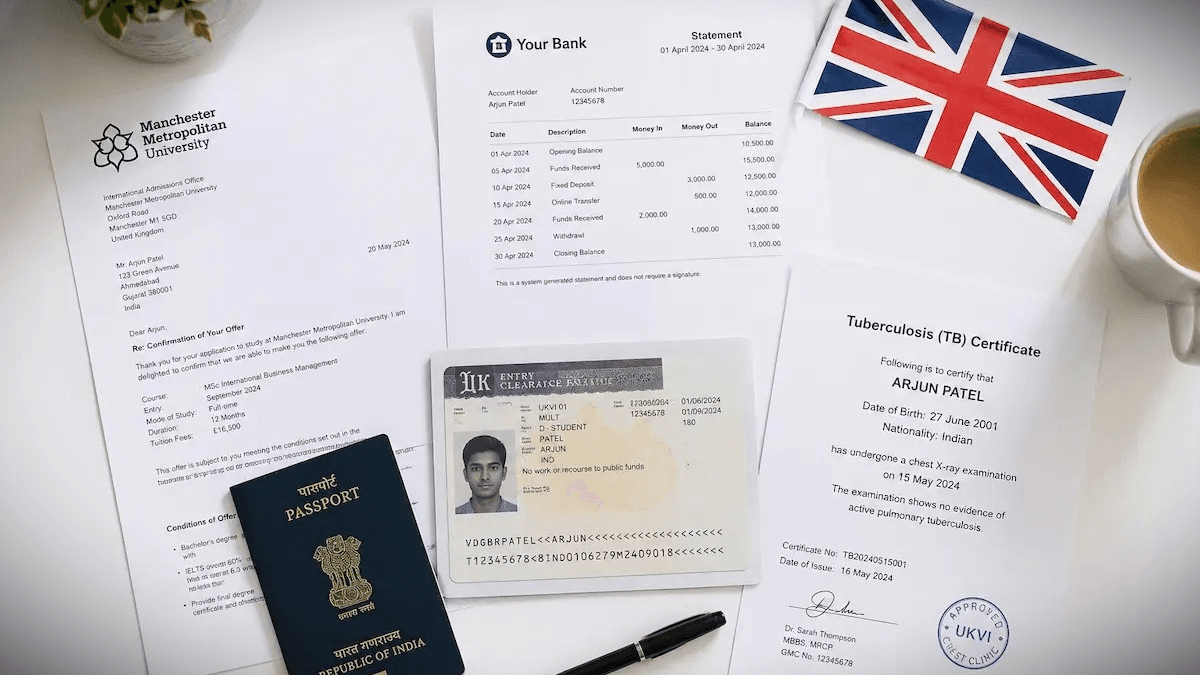
Document Checklist
Valid Passport — must cover your entire stay
UK Student Visa Vignette — confirm the valid-from date before booking flights
Confirmation of Acceptance for Studies (CAS) — your university sponsorship reference
Unconditional Offer Letter — proof of academic placement
Financial Evidence — bank statements, scholarship letters, or loan sanction letters
TB Test Certificate — mandatory for applicants from designated countries (India, Pakistan, Bangladesh, Nigeria, and others)
Accommodation Confirmation — tenancy agreement or halls booking
Academic Transcripts and Certificates — original qualifications
BRP Decision Letter — states where to collect your Biometric Residence Permit within 10 days of arrival
Immigration Health Surcharge (IHS) Receipt — proof of NHS levy payment
Secure Accommodation Before You Fly
Student housing near top UK universities fills up 3–5 months before the academic year. Cities like London, Manchester, Bristol, and Edinburgh are especially competitive. Don’t leave this until after arrival.

Types of Student Accommodation
University Halls — safest first-year option; bills included, on-campus community
Purpose-Built Student Accommodation (PBSA) — private blocks (Unite Students, iQ, Vita) with all-inclusive rent
Private Shared Houses — cheaper per month but needs a UK guarantor and contract review
Homestay — ideal for students wanting cultural immersion and a quieter environment
Before Signing Any Contract, Confirm:
Are bills (water, electricity, broadband, council tax) included in the rent?
Is the deposit protected in a government-approved scheme (TDS, DPS, or MyDeposits)?
What is the notice period and early-termination penalty?
Is the landlord HMO-licensed and compliant?
⚠️ Scam Alert
Never transfer a deposit through social media or WhatsApp. Verify all listings via Rightmove, Zoopla, or your university’s accommodation office before any payment.
Meet the 2026 Visa Financial Requirements 💷
The UK Home Office requires you to show maintenance funds held in your bank account for 28 consecutive days before your visa application.
Study Location Required Monthly Amount Visa Total (up to 9 months)
London (Greater London) £1,529 per month £13,761
Outside London £1,171 per month £10,539
Important: These figures are in addition to any unpaid first-year tuition fees. For example, a London-based student with £10,000 outstanding in tuition needs to show at least £23,761.
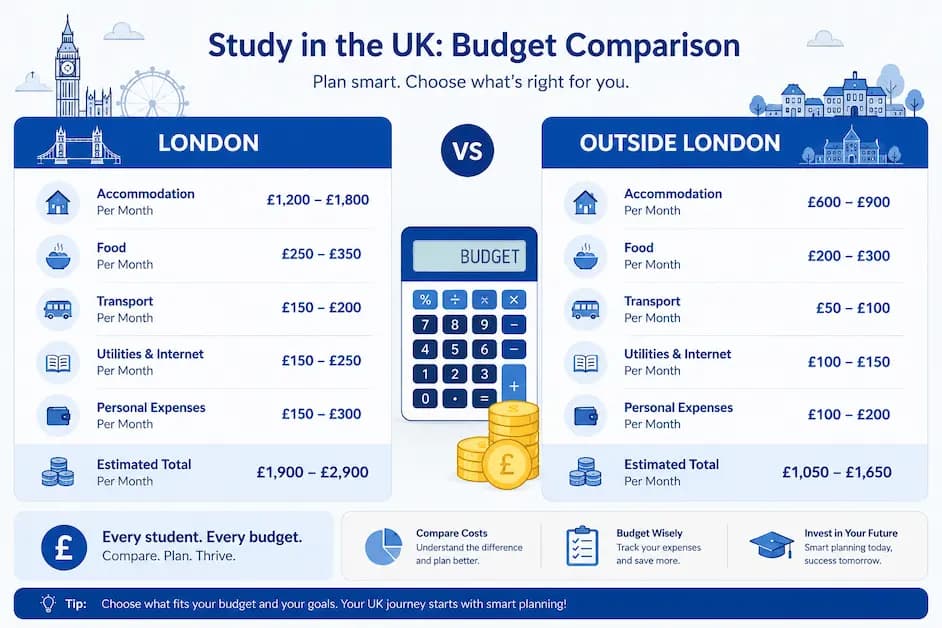
Realistic Monthly Living Costs (2026)
Expense Monthly Cost Money-Saving Tip
Rent £500–£1,200 Book early; consider locations 20–30 min from city centre
Groceries & Food £150–£280 Shop at Aldi, Lidl, Asda; use Too Good To Go
Transport £50–£130 Get a 16-25 Railcard (1/3 off trains)
Mobile & Broadband £15–£45 VOXI, giffgaff, Smarty from £10/month
Textbooks £30–£80 Buy second-hand via AbeBooks or Facebook Marketplace
Leisure £80–£200 UNiDAYS and Student Beans: 500+ brand discounts
Utilities (if not included) £60–£120 Compare on Uswitch; split via Splitwise
Set Up UK Banking and Finances
The UK is largely cashless. Arriving without a working payment method adds unnecessary stress from day one.

Step 1 (Pre-Arrival): Get a Multi-Currency Travel Card
Open a Wise or Revolut account before you leave. These offer mid-market exchange rates — far better than airport bureaux de change — and work immediately on arrival.
Step 2 (Post-Arrival): Open a UK Bank Account
Bank Type Example Best For Setup Time
Digital Banks Monzo, Chase UK, Revolut UK Fast setup, no branch visit Same day–24 hours
High-Street Banks HSBC, Barclays, Lloyds, NatWest In-person support, student overdraft 3–7 business days
Open a UK bank account within your first week. Many landlords and employers require one for payments and payroll.
Complete University Pre-Enrolment Tasks
Visa approval doesn’t mean your university is ready for you. Check your university email daily in the 6–8 weeks before arrival. Missing deadlines can block your course registration or campus access.

Pre-Enrolment Checklist
Confirm tuition fee payment is reflected on your student portal
Complete the online pre-enrolment form (passport details, home address, course registration)
Activate your university email and IT accounts (Microsoft 365 or Google Workspace)
Register on Canvas, Blackboard, or Moodle — your virtual learning environment
Book Orientation and Welcome Week — spaces are limited
Register with the International Student Support office
Sort library card and campus access credentional
Book Travel and Plan Your Airport Arrival

Flight Booking Rules
Book only after your visa is approved and vignette received
Your arrival date must be on or after the valid-from date on your vignette
Aim to arrive 5–7 days before your course start date
Airport Transfer Tips
Pre-book a taxi, shuttle, or National Express/Megabus coach to your accommodation
Download Citymapper before boarding for real-time UK transport directions
Keep £50–£100 in cash accessible for immediate expenses on arrival day
Confirm check-in time with your accommodation provider before flying
Understand UK Healthcare and NHS Registration

IHS Covers
GP appointments and specialist referrals
Hospital treatment, A&E, and emergency care
NHS mental health services
Prescriptions at standard NHS charge (£9.90 per item in England; free in Scotland and Wales)
How to Register With a GP
Find your nearest NHS GP at nhs.uk (prioritise an on-campus practice)
Register in person or online using your passport, visa, and UK address
Registration is free and doesn’t require a National Insurance number
Do this in your first week — not when you’re already unwell
Know Your Part-Time Work Rights

Period Permitted Hours Restriction
Term-Time Up to 20 hours/week No self-employment or professional sports/entertainment
University Vacations Full-time (unlimited) Must remain enrolled with valid visa
Course Placement Full-time Only if officially part of your degree programme
Always verify your specific work conditions in your visa decision letter — some programmes (medicine, law) carry different restrictions.
🚀 Start Your UK Career Before You Land
Top graduate schemes at Deloitte, Goldman Sachs, Google, and Unilever open applications in September–October — often before your first semester ends. Update your LinkedIn profile and research schemes before you arrive.
Prepare for UK Academic and Social Culture

Academic Culture
Critical thinking is everything — UK marking rewards analysis and original argument, not memorisation
Seminars are participatory — active contribution is expected and sometimes graded
Referencing is taken seriously — learn Harvard, APA, or MHRA before arriving
Office hours are underused — most academics hold weekly drop-in sessions; use them
Social Life
Join a Student Union society in your first week — fastest way to build a social network
Queuing is non-negotiable — it’s a genuine social norm; cutting in line is considered rude
British understatement is real — “not bad” often means genuinely impressed
Pack Smart for the UK Climate 🧥
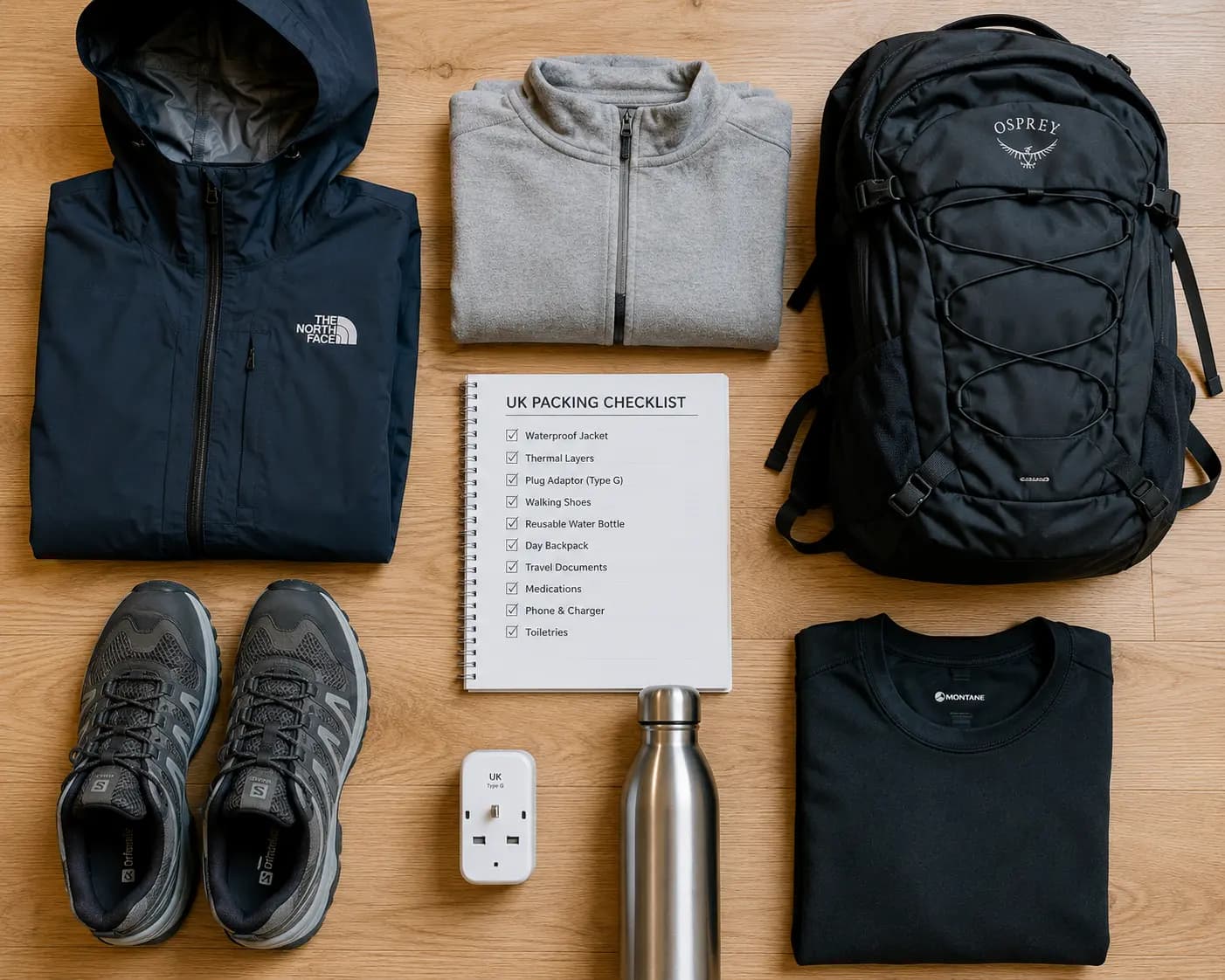
Essentials
Compact waterproof jacket — non-negotiable; you’ll wear it October through May
Thermal base layers and knitwear — older UK buildings run cold
Waterproof walking shoes — you’ll walk far more than expected
UK Type G plug adaptors (x2) — three-pin rectangular plugs used across the UK
Reusable water bottle — UK tap water is safe; saves money and plastic
What Not to Overpack
Excessive clothing — UK charity shops (Oxfam, TRAID) offer great second-hand pieces cheaply
Thick bedding — most halls supply it; Dunelm and Primark Home cover the rest affordably
Kitchen equipment — halls typically provide the basics
Conclusion
How well your first weeks in the UK go is almost entirely determined by what you did before you arrived. The students who settle in quickly aren’t lucky — they secured accommodation months early, had their documents backed up, registered with a GP in Week 1, and landed with a realistic budget already in place.
UK Pre-Arrival Essentials ✅
Documents: Passport, Visa, CAS, TB Certificate, Backups
Housing: Accommodation, Deposit, Check-in
Finance: Funds, GBP Card, Bank Account, Budget
University: Tuition, Enrolment, Student Account, Orientation
Travel: Flight, Airport Transfer, Offline Maps
Health & Career: GP, IHS Receipt, Work Rights, LinkedIn
Packing: Waterproof Jacket, UK Plug Adaptor