
Introduction
Moving to the UK for university is one of the biggest transitions a student will make, and accommodation sits at the centre of it — shaping your budget, your commute, your study environment, and how quickly you settle in. For international students juggling visa paperwork on top of everything else, getting housing sorted before arrival matters even more in 2026 than in previous years, because the legal landscape for private renting has just shifted under the Renters' Rights Act. This guide updates the halls-vs-private debate with current 2026 cost data and the legal changes every student — especially every international student — needs to understand before signing anything.
1. Which Is Better: University Halls or Private Accommodation?
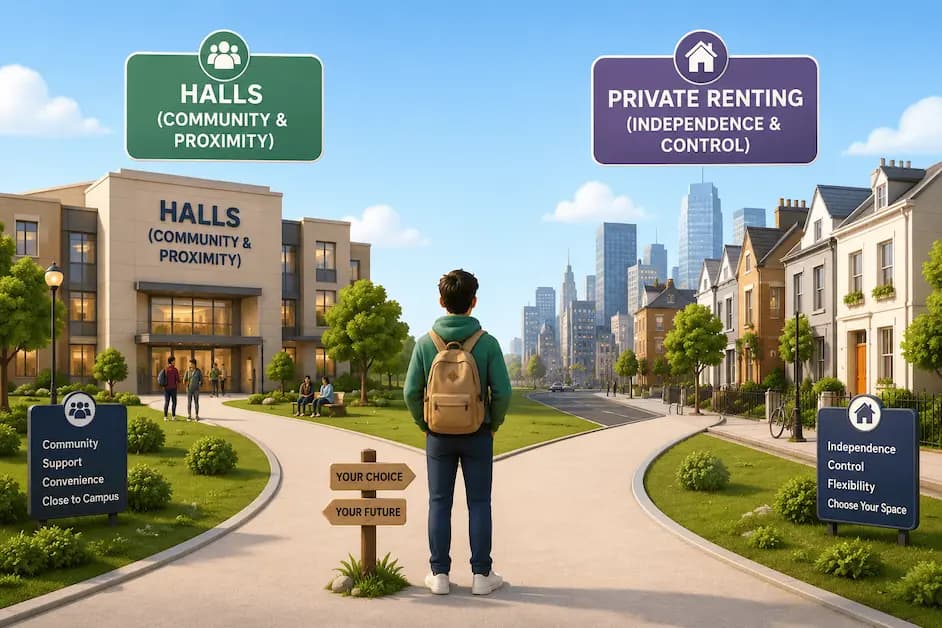
University Halls
Best choice for most first-year and international students.
Managed by or affiliated with the university.
Safe, secure, and designed to help students adjust to university life.
Offers a range of room options, from shared rooms to private en-suite rooms.
Usually located on or near campus.
Rent typically includes utility bills and Wi-Fi.
Ideal for students who want convenience and an active social environment.
Private Accommodation
Better suited for second-year students and beyond.
Ideal if you already know the city, have friends to live with, and want more independence.
Includes shared houses (HMOs), private flats, and Purpose-Built Student Accommodation (PBSA).
Gives you more freedom to choose your housemates and lifestyle.
May be cheaper than university halls, but bills are often not included.
Requires understanding tenancy agreements and the latest UK rental regulations introduced in 2026.
2. The Real Cost of Student Housing in the UK (2026 Figures)
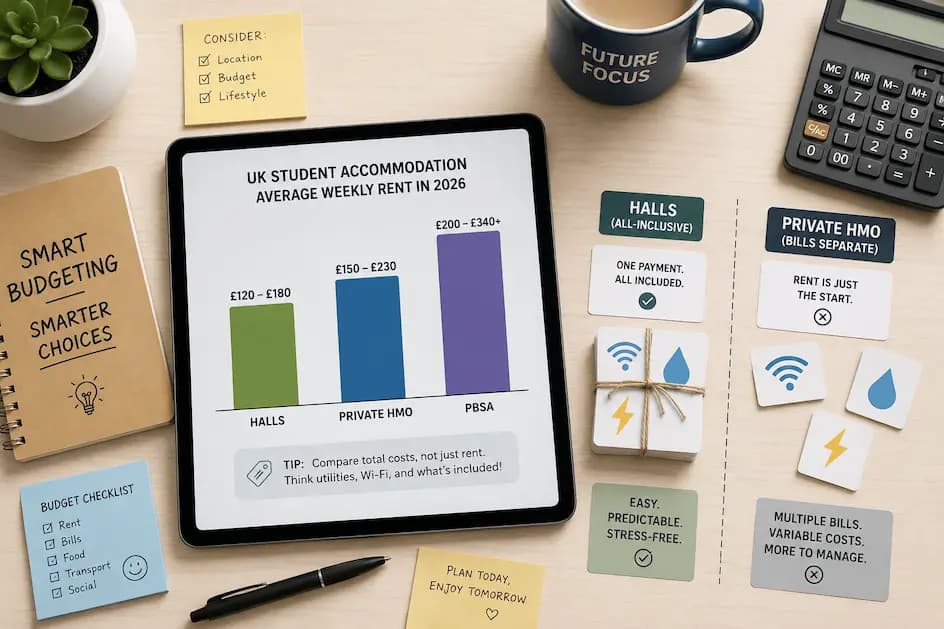
UK Student Accommodation Costs (2026)
Private shared houses (HMOs) are usually the cheapest option for weekly rent, but you'll typically pay utility bills separately.
University halls and Purpose-Built Student Accommodation (PBSA) cost more, but rent usually includes electricity, water, heating, Wi-Fi, and other bills, making budgeting easier.
University Halls: £120–£280/week (Outside London), £210–£300+/week (London) – Bills Included ✅
Private Shared House (HMO): £90–£160/week (Outside London), £150–£250+/week (London) – Bills Usually Not Included ❌
PBSA: £153–£280+/week (Outside London), £210–£341+/week (London) – Bills Included ✅
Things to Keep in Mind
Students typically spend 40–60% of their monthly budget on accommodation.
Private accommodation usually requires an additional £70–£120 per month for utility bills and broadband.
Full-time students are exempt from Council Tax. If you live in private accommodation, submit your university enrolment certificate to your local council to claim the exemption.
3. The 2026 Game-Changer: The Renters' Rights Act
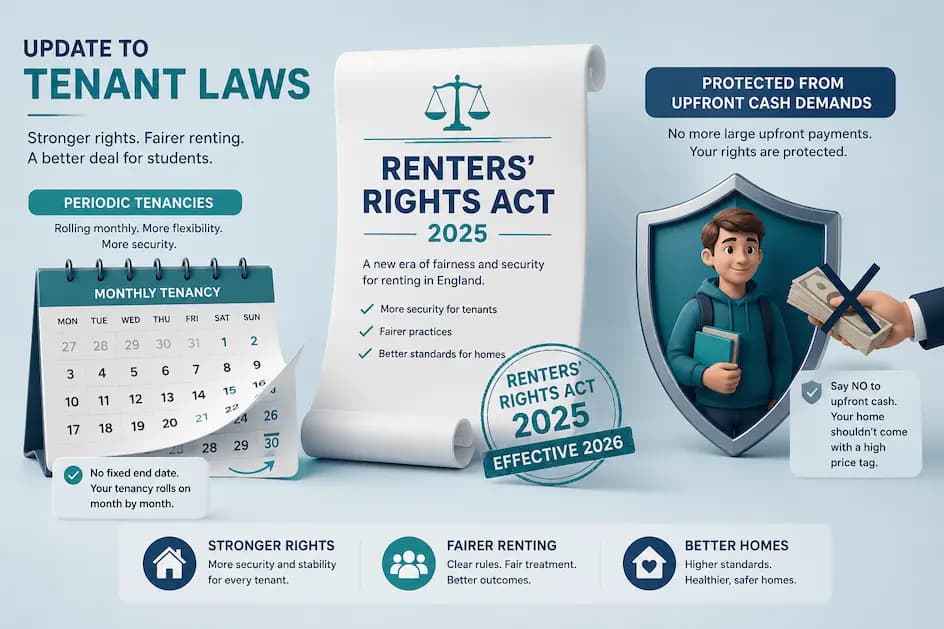
Renters' Rights Act 2026: Key Changes
Rolling tenancies: Fixed-term private student contracts have been replaced with rolling (periodic) tenancies. Students can leave by giving 2 months' notice.
Advance rent limit: Landlords can no longer request several months' rent upfront.
Ground 4A: HMO landlords can regain possession for the next academic year with 4 months' notice under specific conditions.
University halls: No changes—fixed-term contracts continue as usual.
PBSA: Most code-approved PBSA providers are exempt and can still offer fixed-term contracts.
Impact on international students: Without a UK guarantor, private renting is now more difficult, making university halls and PBSA the preferred accommodation options.
4. Contracts, Legalities, and Tenant Protections

Booking Process
University halls are easy to book through your university's accommodation office.
Private rentals involve more paperwork and legal requirements.
UK Guarantor
Most private landlords still require a UK-based guarantor.
If you don't have one, you can use a professional guarantor service (for a fee) or choose a PBSA provider that accepts international students without a UK guarantor.
Deposit Protection
Security deposits are capped at 5 weeks' rent.
By law, landlords must protect your deposit in a government-approved Deposit Protection Scheme (DPS) within 30 days.
Right to Rent Check
Before your tenancy starts, landlords must verify your immigration status.
International students need to complete a Right to Rent check using their visa or immigration documents.
HMO Licensing
If you live in a shared house with 5 or more unrelated people, the property must have a valid HMO licence issued by the local council.
Always ask the landlord or letting agent for proof of the licence before signing the tenancy agreement.
5. Lifestyle, Commuting, and Social Dynamics

Halls deliver an instant, high-density social network right on campus. Shared kitchens, hall socials, and proximity to lectures make it easy to build friendships fast — university surveys consistently find that making friends is the part of halls life students value most.
Private renting asks more of you: managing a commute, splitting bills, coordinating chores with housemates. In exchange, it's generally quieter, which is part of why it appeals more to postgraduates and final-year students who need a calmer environment for serious study. If you rent further from campus, factor the time and cost of commuting into your weekly budget — a cheaper room four miles out can end up costing more overall than a pricier room next to campus.
Decision Guide by Student Type
First-year: University halls — easy, social, low-risk.
International: University halls or PBSA — easier without a UK guarantor.
Budget-focused: Shared HMO — usually the cheapest.
Privacy-focused: PBSA studio — private and self-contained.
Postgraduates: Private studio or shared house — quieter and study-friendly.
Couples/families: Private flat — more space and independence.
Expert Tips
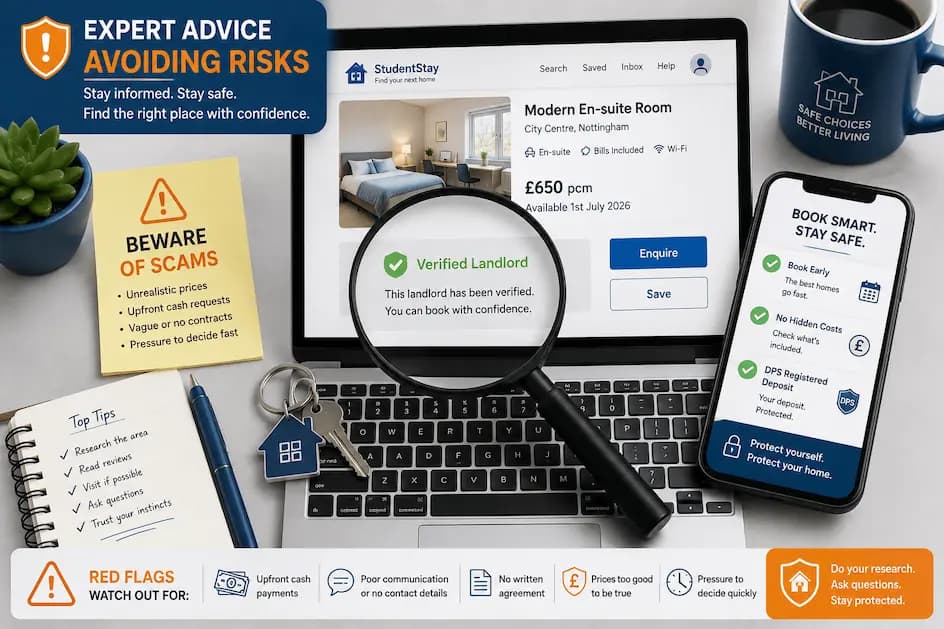
Book early: Demand is high, especially in major student cities.
Budget wisely: Factor in bills, commuting, and laundry costs.
Avoid scams: Verify the landlord and deposit protection before paying.
Check your contract: Understand whether it’s periodic or fixed-term.
Conclusion
The choice remains simple: halls offer convenience and community, while private renting offers more independence and flexibility. In 2026, new rental rules make halls and PBSA more attractive for many international students. Book early and check your contract carefully.